7 Interesting Facts & Statistics About The Jerónimos Monastery
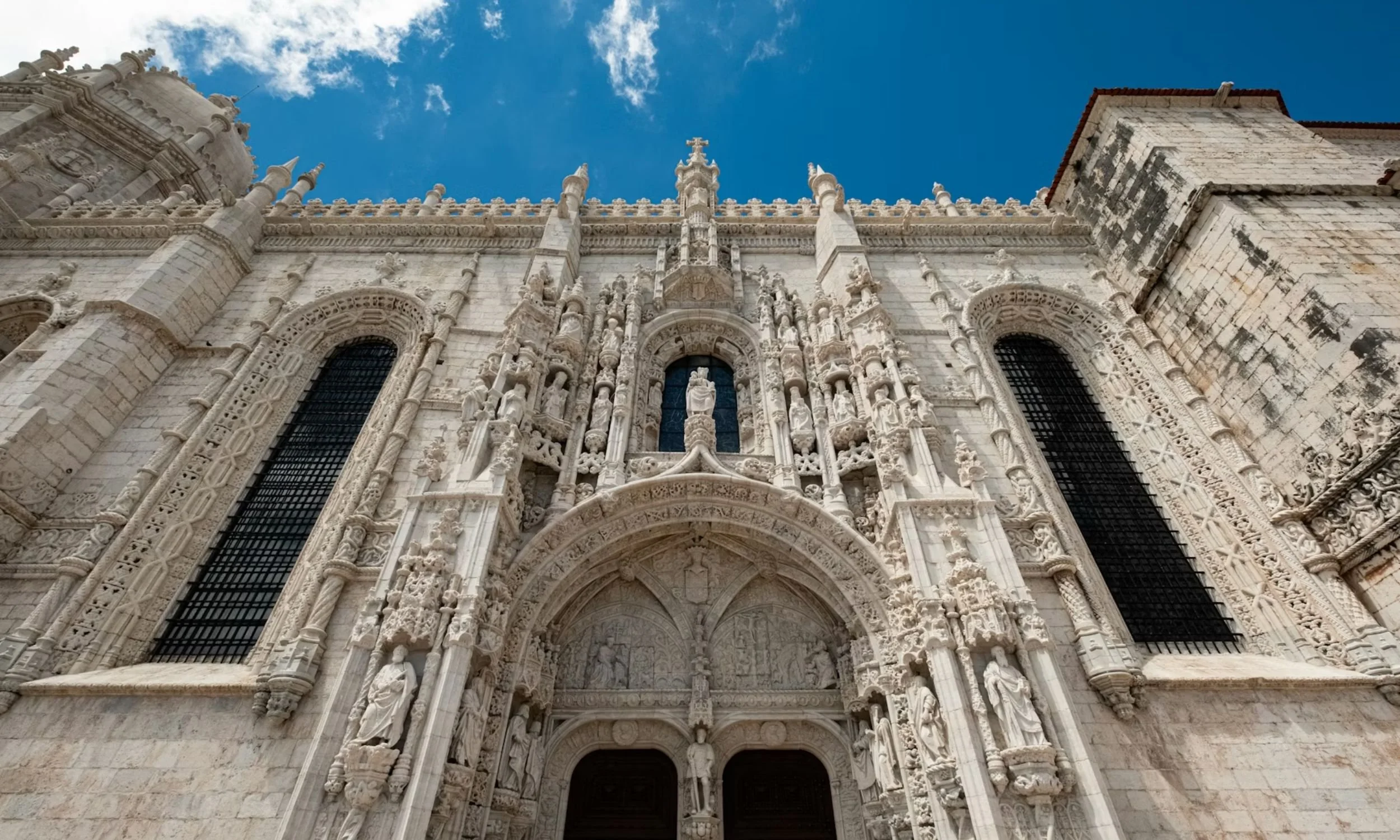
Jerónimos Monastery is worth a visit for a lot of reasons, but here are some interesting facts and stats you may not know.
1. Jerónimos Monastery is the most visited national monument.
In 2023, Portugal’s national museums and monuments received a record 5 million+ visitors. Of those, 965,526 visited Jerónimos Monastery, making it the most visited cultural site in the country.
Jerónimos claimed the top spot again in 2024 with 946,014 visitors—more than double that of the second-place Sagres Fortress (443,691 visitors). The numbers confirm what locals already know: Jerónimos is by far Portugal's most popular landmark.
2. It was declared a UNESCO World Heritage Site in 1983.
In 1983, UNESCO designated Jerónimos Monastery as a World Heritage Site, along with the nearby Belém Tower. The recognition honored both monuments as exceptional examples of Manueline architecture and symbols of Portugal's Age of Discovery—a period when Portuguese explorers opened new maritime routes and changed the course of world history.
According to UNESCO, “The Monastery of the Hieronymites and Tower of Belém are a unique and exceptional testimony to a 15th and 16th-century civilization and culture. They reflect the power, knowledge and courage of the Portuguese people at a time when they consolidated their presence and domain of intercontinental trade routes.”
3. It housed an orphanage and school.
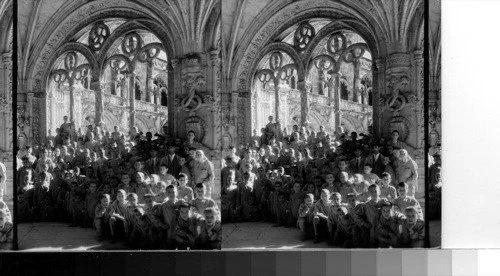
The orphanage at Belem in the old monastery of Sao Jeronimo (cloisters). Lisbon, Portugal. Keystone-Mast Collection, UCR/California Museum of Photography, University of California at Riverside.
After the dissolution of the Order of St. Jerome in 1833, the Jerónimos Monastery—then in a state of neglect following damage from the 1755 earthquake—was repurposed as an orphanage and school. The children were housed in the cloisters and other parts of the monastery until the orphanage closed in the 1940s.
The photo above, from a collection of the University of California, was taken in August 1931.
4. It took 100 years to build.
Jerónimos Monastery wasn’t built in a hurry. Construction began in 1501 under King Manuel I, funded by a 5% “pepper tax” on Portugal’s booming spice trade, and unfolded across multiple reigns and architects. By the time it was finished almost a century later, Portugal had lost its independence, making Jerónimos both a monument to immense wealth and the closing chapter of the country’s Golden Age.
Consider taking a Jerónimos Monastery guided tour if you want to gain a deeper understanding of the history and cultural significance of this impressive site.
5. It’s the birthplace of the famous Pasteis de Belém.
We have the Jerónimos Monastery to thank for the delicious Portuguese custard tarts, Pasteis de Belém. According to the bakery’s own website, at the beginning of the 19th century, next door to the Monastery was a sugar cane refinery attached to a small general store. “As a result of the 1820 liberal revolution, all convents and monasteries in Portugal were shut down in 1834, the clergy and labourers expelled. In an attempt at survival, someone from the monastery offered sweet pastries for sale in the shop; pastries that rapidly became known as ‘Pastéis de Belém’.”
It’s widely believed that the tart came about due to a surplus of egg yolks at the monastery: the monks used the egg whites to starch their habits, leaving them with more yolks than they knew what to do with. Someone had the bright idea to make custard, and the tart was born.
6. Vasco da Gama spent his final night here.
Before departing on his historic voyage to India in 1497, Vasco da Gama reportedly prayed at the site. He is now buried inside the monastery, directly linking Jerónimos to one of the most important journeys in global history.
7. It’s more than 300 meters long.
Its main façade stretches over 300 metres (984 feet), making it one of the longest monastery façades in Europe. At its heart sits a 55 × 55 metre cloister, perfectly square and carved with extraordinary detail across two levels. The complex rises to an average height of around 20 metres, while the richly decorated South Portal soars to 32 metres.
I hope these stats and facts gave you a bit of background on this incredible monument!
If you’re visiting the area with kids, you might like to check out my full guide to family-friendly things to do in Belém.